
 ~4 MIN
Intro
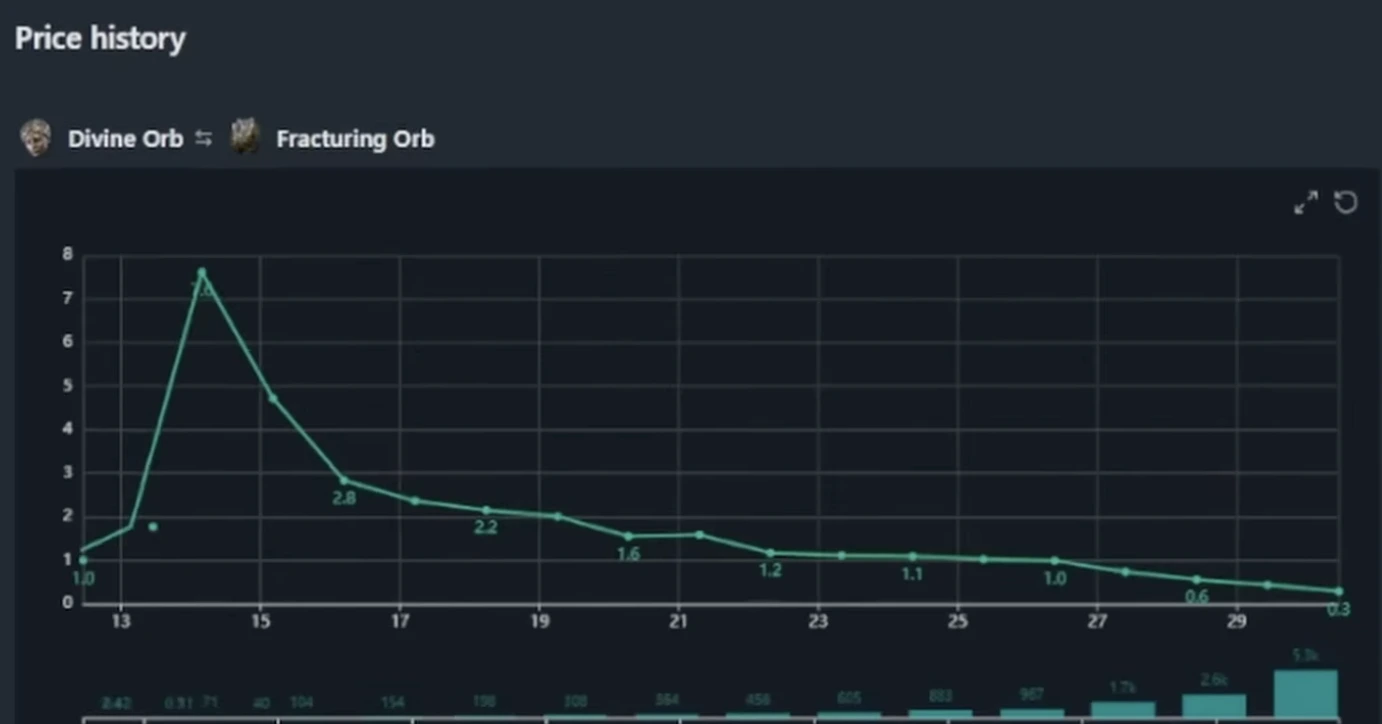
The Path of Exile 2 Trade League economy has entered its first truly chaotic phase. Prices exploded, Divine Orbs lost relative value, and many players suddenly found that weeks of progress felt devalued overnight.
This wasn’t a slow inflation cycle. It was a shock event—and understanding what happened is the difference between quitting in frustration and adapting successfully.
This article breaks down:
- what actually broke the economy
- why fixes won’t fully reverse it
- who benefits and who struggles
- and what smart players should be doing right now

What Actually Broke the PoE 2 Economy
The root cause wasn’t general loot buffs or normal market growth. The problem came from massive, multiplicative currency generation tied to Incursion Temple mechanics.
A combination of:
- extremely strong Temple modifiers
- multiplicative stacking of rune and room bonuses
- repeatable Temple access beyond intended pacing
created a situation where top-end players were injecting enormous amounts of high-tier currency into the economy in a very short time.
Once that currency exists, the market cannot “reset.” Even after hotfixes, the damage is permanent.
Why Divine Orbs Lost Their Meaning
Many players felt poorer—but what actually happened was currency devaluation, not item appreciation.
Signs of inflation:
- boss drops skyrocketing in Divine cost
- crafting currencies spiking in price
- fragments and access items exploding in value
The important distinction:
Items didn’t become more valuable — Divine Orbs became less scarce.
Players who stored most of their wealth in raw currency felt this the hardest.
Emergency Fixes Help Flow, Not Prices
Recent balance adjustments:
- stopped extreme Temple abuse cases
- increased Temple access through natural gameplay
- boosted higher-tier Temple monster loot
These changes slow further damage, but they cannot undo existing inflation. The economy has already shifted to a new baseline.
This means players must adapt, not wait for a rollback that will never come.
Who Wins and Who Loses in This Economy
The Winners
- players who set up Temple farming early
- groups coordinating multiplicative strategies
- players farming niche, non-Temple items
The Losers
- players saving Divines for one big upgrade
- players farming generic maps without specialization
- players ignoring high-value side mechanics
This doesn’t mean casual or solo players are locked out—it means strategy matters more than raw playtime.
Why Normal Monster Farming Is Now Weak
One of the biggest shifts:
- generic monster drops are heavily devalued
- Temple loot floods the same item categories
- basic mapping alone struggles to compete
As a result, profitable farming now requires:
- targeting specific drop-restricted items
- focusing on mechanics Temple farmers ignore
- specializing instead of generalizing
This is where many players stall—not because content is impossible, but because their strategy hasn’t evolved.
Crafting Is Still Powerful—If You Use It Right
Ironically, inflation made crafting more attractive.
Why?
- wealthy players buy finished items, not bases
- crafting inputs are less contested
- multiple attempts are more affordable than before
Instead of chasing pre-priced items, many players improve power more efficiently by refining what they already own. Tools like PoE Improve Build help identify which upgrades actually matter—without burning currency blindly.
Stop Comparing Yourself to Market Extremes
One of the biggest mental traps:
- comparing today’s prices to week-one prices
- chasing mirror-tier builds designed for top 1%
- assuming progression is “over”
Reality check:
- pinnacle bosses are still beatable
- Atlas completion is unchanged
- player power relative to content is intact
The only thing that changed is how wealth is distributed.
What You Should Be Doing Right Now
Instead of chasing Divines directly, focus on supplying what inflated players need but don’t farm.
Effective approaches:
- mechanics with restricted drop pools
- consumables used in juiced content
- fragments, catalysts, omens, and access items
Maintaining flexibility with currency also matters. Many players stabilize progression by holding resources like PoE Divine Orbs and PoE Exalted Orbs rather than committing everything into one gamble.
Is This Bad for the Game?
Not necessarily.
Historically, some of the most memorable PoE leagues were economically broken—but only the first time players experienced them.
For some:
- inflated leagues feel exciting
- big drops feel attainable
- experimentation increases
For others:
- progression feels meaningless
- goals move too fast
- motivation drops
Neither reaction is wrong. The key is recognizing which type of player you are.
Long-Term Outlook: This Will Stabilize
While prices won’t revert:
- farming patterns will settle
- niche markets will normalize
- demand will concentrate
Players who adapt early usually end up ahead once the chaos calms down.
For long-term aspirational goals—like eventual mirror-tier crafting—targets such as Mirror of Kalandra remain relevant, but they are destinations, not requirements.
Final Takeaways
Patch 0.4.0 didn’t kill PoE 2’s Trade League—it stress-tested it.
Key lessons:
- inflation changes strategy, not viability
- specialization beats general farming
- crafting is stronger than raw buying
- mindset matters as much as mechanics
If you play smart, PoE 2 remains fully rewarding—even in a broken economy.
If you want to keep progressing without fighting the market blindly:
Onlyfarms helps you adapt faster—no matter how wild the league economy gets.