

Content:
- Key Takeaways
- Plants in Arc Raiders
- Plants Events
- Plants Locations
- Buried City Plants
- Blue Gate Plants
- Dam Plants
- Spaceport Plants
- Plants – Full List
- Lemon
- Roots
- Apricot
- Olive
- Poisonous Plant
- Mushroom
- Moss
- Prickly Pear
- Resin
- Agave
- Torch Ginger
- Great Mullein
- How to Use Plants
- Plants Farming Tips
- Plants FAQ
Arc Raiders Plants Guide
In Arc Raiders, plants are one of the most valuable natural resources you can find across every map. In this updated Arc Raiders Plants guide, you’ll learn about all Arc Raiders plants, where to find them, and how to use them for crafting, healing, and upgrading your companion Scrappy. We’ll also break down how the Lush Blooms event changes plant spawns, the best farming routes for each region, and practical tips to safely gather rare herbs during your raids without losing your loot to enemies or other players.
By the end of this guide, you’ll know which plants to prioritize, which routes to run, and how to turn simple herbs into powerful survival tools and late-game upgrades.
Arc Raiders Plants – Key Takeaways
- Plants are essential for progression.
Every Arc Raiders plant has a clear purpose — from emergency healing and stamina boosts to powerful crafting recipes and Scrappy upgrade materials. Ignoring them means slower progression and more risk during mid- and late-game raids. - Best maps for focused farming.
Farm fruits in Blue Gate, desert plants and tough shrubs in Buried City, and rare, high-value healing herbs in Dam Battlegrounds. Each map has its own plant identity, so learning which biome supports which resource will make your routes much more efficient. - Watch for global and local events.
The Lush Blooms event significantly increases plant spawn rates and adds Wicker Baskets filled with random healing, crafting, and utility items. During this event, it’s worth rerouting your raids specifically to hit high-density plant zones. - Plan efficient, safe farming routes.
Use tight, circular farming loops like Olive Grove and Hydroponic Dome to gather plants quickly while staying close to extracts and safe paths. Optimized routes reduce downtime, minimize risk, and let you chain multiple profitable raids in a row. - Save rare materials for end-game crafting.
Don’t waste rare herbs such as Moss and Great Mullein on low-tier items. These are crucial for crafting Defibrillators, advanced medkits, and high-tier bandages, making them far more valuable as upgrade materials than as quick cash from vendors.
Plants in Arc Raiders
In Arc Raiders, plants are one of the core systems behind survival, crafting, and long-term progression. They’re not just background decoration — they’re your lifeline in the wild. From simple stamina fruits that keep you moving to rare medicinal herbs used in advanced healing items, every Arc Raiders plant has a distinct purpose and value. Ignoring them means wasting free power scattered all over the map.
Vegetation changes dramatically between locations. In Blue Gate, you’ll mostly encounter fruit trees like lemons and apricots, growing in fertile valleys and greener zones. These are perfect for quick healing and stamina restoration during early and mid-game raids. In Dam Battlegrounds, you’ll find more medicinal plants such as mushrooms and Great Mullein, which are prized for their healing and crafting potential, especially when you start focusing on higher-tier medical kits and bandages.
By contrast, Buried City and Spaceport are dominated by hardier, desert-style plants. Here, tough species like prickly pears, olives, and agave flourish in dry terrain. While they may look less impressive than bright fruits or glowing herbs, these plants are crucial Arc Raiders crafting materials used for food, buffs, and Scrappy-related upgrades. Learning which biomes grow which plants will help you quickly route your raids for exactly the resources you need.
Crafting from gathered plants unlocks a wide range of useful items — from medical supplies and stamina food to specific components required for Scrappy upgrades and utility gadgets. For many players, this plant-based crafting loop becomes a big part of any successful run. Whether you’re playing solo or in a full squad, knowing where to find each plant, what it does, and which recipes use it gives you a huge advantage during raids and longer Expeditions.
Arc Raiders Plants Events
The main Arc Raiders plants event that directly impacts resource gathering is Lush Blooms — a limited-time world modifier that dramatically boosts natural loot across active maps. While this event is running, you’ll find noticeably more fruits, herbs, roots, and other plant-based crafting materials both in the open world and inside special containers. It’s basically a seasonal harvest window for dedicated gatherers and crafters.
When Lush Blooms is active, you’ll start spotting new Wicker Baskets scattered around camps, residential areas, outposts, and nature zones. These special containers can hold almost any type of Arc Raiders plant: from common roots, resin, and basic herbs to rare mushrooms and Great Mullein. The exact loot pool is slightly randomized each raid, but Wicker Baskets always provide multiple nature items at once, making this event one of the best ways to stockpile crafting materials fast.
Beyond containers, the Lush Blooms event also increases wild plant spawns. You’ll notice fruit trees yielding more lemons and apricots, desert plants appearing more often, and cacti and moss spots respawning quicker between raids. This is especially valuable for players targeting Scrappy upgrade components, high-tier healing plants, or bulk materials for medicine and stamina consumables.
If you see the Lush Blooms notification on the map selection screen, treat it as a free efficiency boost. Queue a few quick raids through Blue Gate, Dam Battlegrounds, or Buried City, and build routes that hit every Wicker Basket, valley, and nature-heavy zone you can safely reach. As long as you extract consistently, you’ll walk away with a full stash of rare Arc Raiders crafting plants, ready for future crafting sessions, Scrappy upgrades, and high-level raid preparation.
Arc Raiders Plants Locations
Not every region in Arc Raiders is overflowing with greenery. Some areas are packed with forests, fruit trees, and lush valleys, while others hide only a handful of rare herbs in dangerous, hard-to-reach spots. Understanding the best Arc Raiders plant locations is crucial if you want to gather resources efficiently, avoid wasted raids, and always have the materials you need for crafting and Scrappy upgrades.
As a rule of thumb, the richer and greener the environment, the better the plant loot. Maps like Blue Gate and Dam Battlegrounds are filled with Arc Raiders healing plants, crafting herbs, and mushrooms, making them ideal for players who prioritize survivability and medical crafting. Meanwhile, Buried City and Spaceport lean toward rarer, desert-style vegetation such as prickly pears, olives, and agave, which are often needed for more specialized recipes, buffs, and long-term progression.
Each region has its own unique ecosystem and plant spawn patterns, so choosing the right map for your goals can save you a lot of time and reduce the number of risky raids you need to run. Below is a quick breakdown of where to find plants in Arc Raiders across the main locations:
- Buried City — Dry urban outskirts and southern desert zones; home to Prickly Pears, Agave, and occasional Apricots. Great for desert plants and mid-game crafting materials.
- Blue Gate — Lush green valleys and orchards filled with Lemons, Olives, and Resin, making it perfect for early-game healing items and basic crafting resources.
- Dam Battlegrounds — Swampy forest areas and the Hydroponic Dome with Mushrooms, Great Mullein, Moss, and Torch Ginger, offering some of the best high-tier healing plants in the game.
- Spaceport — Sparse vegetation and rocky terrain with patches of Agave and scattered healing herbs; more dangerous but rewarding if you’re already raiding here for other objectives.
Each of these maps supports different Arc Raiders plants, herbs, and crafting materials, and some regions naturally work better for solo farming, while others shine when tackled with a coordinated group. In the next sections, we’ll take a closer look at each region, highlight the most important plants you can find there, and suggest what type of player or build will benefit the most from farming each location.
⚙️ Combine tactical mastery with structured progression using Arc Raiders Leveling — faster unlocks, better synergy, and smarter XP routes.
Arc Raiders Buried City Plants
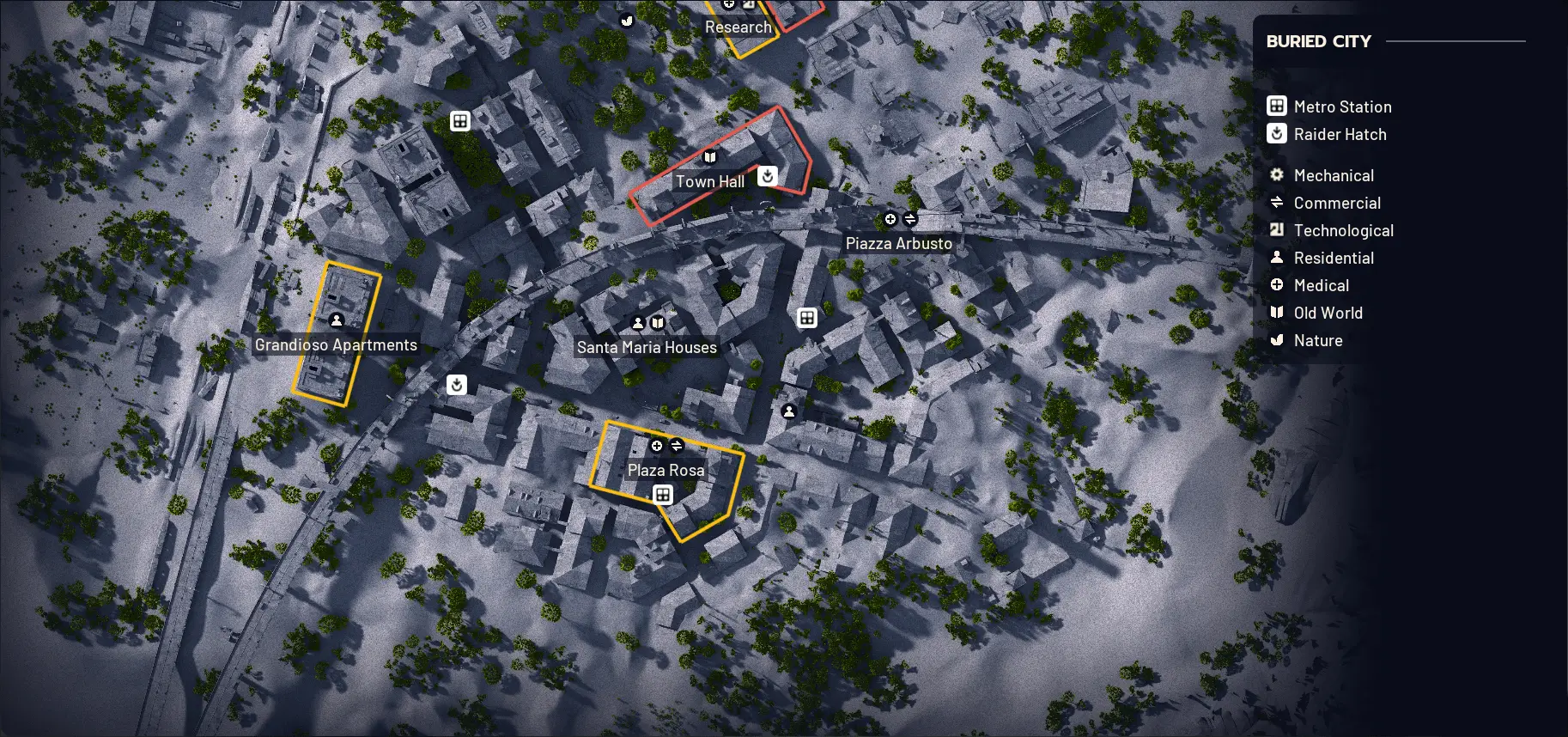
The Buried City is one of the driest, harshest, and most dangerous regions in Arc Raiders, but it’s also a key spot for farming unique desert plants used for stamina boosts, healing items, and crafting upgrades. Instead of dense forests or lush valleys, Buried City offers scattered fruit trees, cactus patches, and rocky desert vegetation growing between ruined buildings and sand-covered streets. If you know where to look, this map can become one of your most reliable Arc Raiders plant farming locations.
Most Buried City plants are concentrated in the southern desert zone, away from the main urban center. Here, you’ll find:
- Prickly Pears – often growing in cactus fields on open sand dunes. Great for quick sustenance and crafting basic stamina or health items.
- Agave – usually found near rocky terrain, cliffs, and dry, cracked ground. Agave is especially valuable for crafting Herbal Bandages and Agave Juice, making it a core ingredient for healing-focused builds.
- Apricot trees – scattered around old residential gardens and abandoned plots at the edge of the city. These are a solid source of light healing and stamina.
If you prefer staying closer to cover instead of venturing into the fully open desert, you can also farm around the inner city parks. A few small fruit trees still remain there:
- Apricots and Lemons can be found around landmarks such as the Library and Town Hall Gardens.
- These locations are ideal for more cautious players, since nearby buildings and walls provide line-of-sight breaks and safer retreat paths during raids.
During the Lush Blooms event, Buried City becomes even more rewarding. You may come across Wicker Baskets in residential districts such as the Santa Maria Houses and other housing blocks. These baskets can contain extra fruits, herbs, and random Arc Raiders crafting plants, giving you a big boost to your resource income in a single run.
When planning your Arc Raiders Buried City farming route, it’s smart to:
- Start in the southern desert to grab Agave and Prickly Pears.
- Move towards residential zones for Apricots and possible Wicker Baskets.
- Finish with a sweep through the city parks near the Library and Town Hall for safer, cover-rich gathering before extracting.
With a bit of planning, the Buried City transforms from a harsh wasteland into a highly efficient desert plant farming hub that supports both solo raiders and coordinated squads.
Arc Raiders Blue Gate Plants
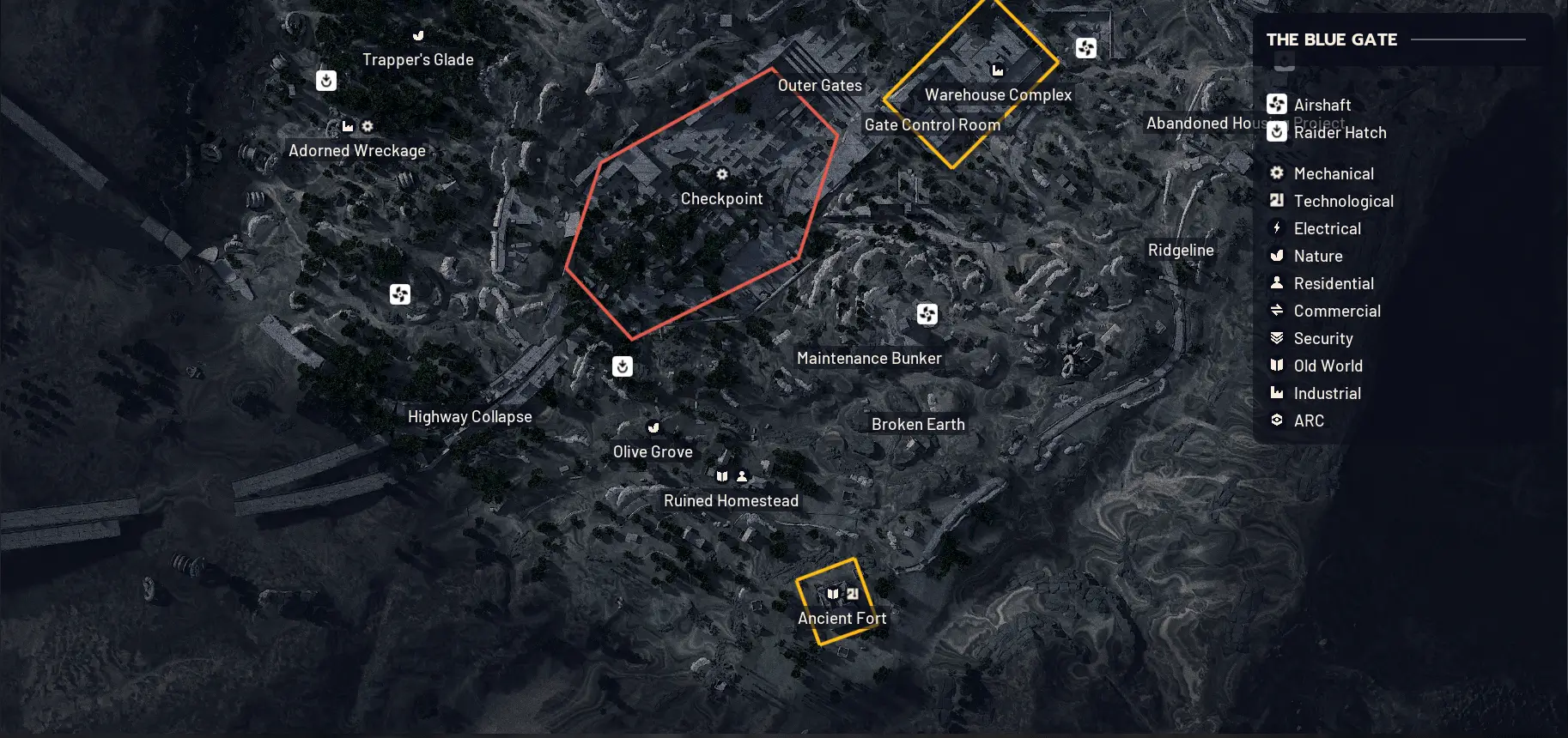
The Blue Gate region is essentially the green heart of Arc Raiders, packed with orchards, fields, river valleys, and wild groves. Compared to the harsh, sandy landscapes of Buried City, Blue Gate feels like a completely different world — a vibrant, life-filled map that’s perfect for early-game gathering. This zone is widely considered the best place to farm Arc Raiders plants and fruits when you’re just starting out, especially if you need reliable stamina recovery items and basic crafting materials.
Most of the vegetation in Arc Raiders Blue Gate is concentrated along the Olive Grove, riverbanks, and forest edges near old settlements and farmsteads. As you move through these areas, you’ll come across:
- Lemon trees – great for quick healing and light stamina regeneration.
- Apricot trees – solid all-round fruits used for basic food and crafting recipes.
- Olive bushes and trees – useful for both crafting and modest sustain during longer raids.
Olive Grove – Best Blue Gate Farming Spot
The Olive Grove is the prime farming hotspot in Blue Gate. This area is a dense cluster of fruit trees where you can kick the trunks to shake down lemons, apricots, and olives in large quantities. Because of the concentration of trees and relatively open sightlines, it’s easy to loop this area, grab a full inventory of fruits, and then either move deeper into the region or rotate toward extraction.
In addition to fruits, you can find Resin hidden in farmlands outside the main Blue Gate entrance and in smaller residential gardens scattered around the outskirts. Resin is a particularly valuable healing item that regenerates health over time and serves as a core ingredient in many early Arc Raiders crafting recipes, especially low- to mid-tier medical supplies.
Blue Gate During Lush Blooms
When the Lush Blooms event is active, Blue Gate becomes a true gatherer’s paradise. The already generous plant density gets boosted even further, and you’ll begin to notice Wicker Baskets appearing:
- Next to farmhouses and barns
- Along main and side roads
- Around camps and small outposts
Each Wicker Basket can contain extra fruits, herbs, and random plant-based crafting materials, often giving you more resources than normal ground spawns in a single interaction. Because the enemies in Blue Gate are generally more manageable than in late-game maps, this is one of the safest and easiest ways to stock up on Arc Raiders healing plants and crafting components without being forced into constant heavy combat.
For efficient farming, consider running tight loops around Olive Grove, nearby farmlands, and road-adjacent camps, prioritizing Wicker Baskets during Lush Blooms. With a few well-planned runs, Blue Gate can fully supply your early-game crafting, Scrappy upgrades, and a healthy stash of stamina and healing items for future raids.
Arc Raiders Dam Plants
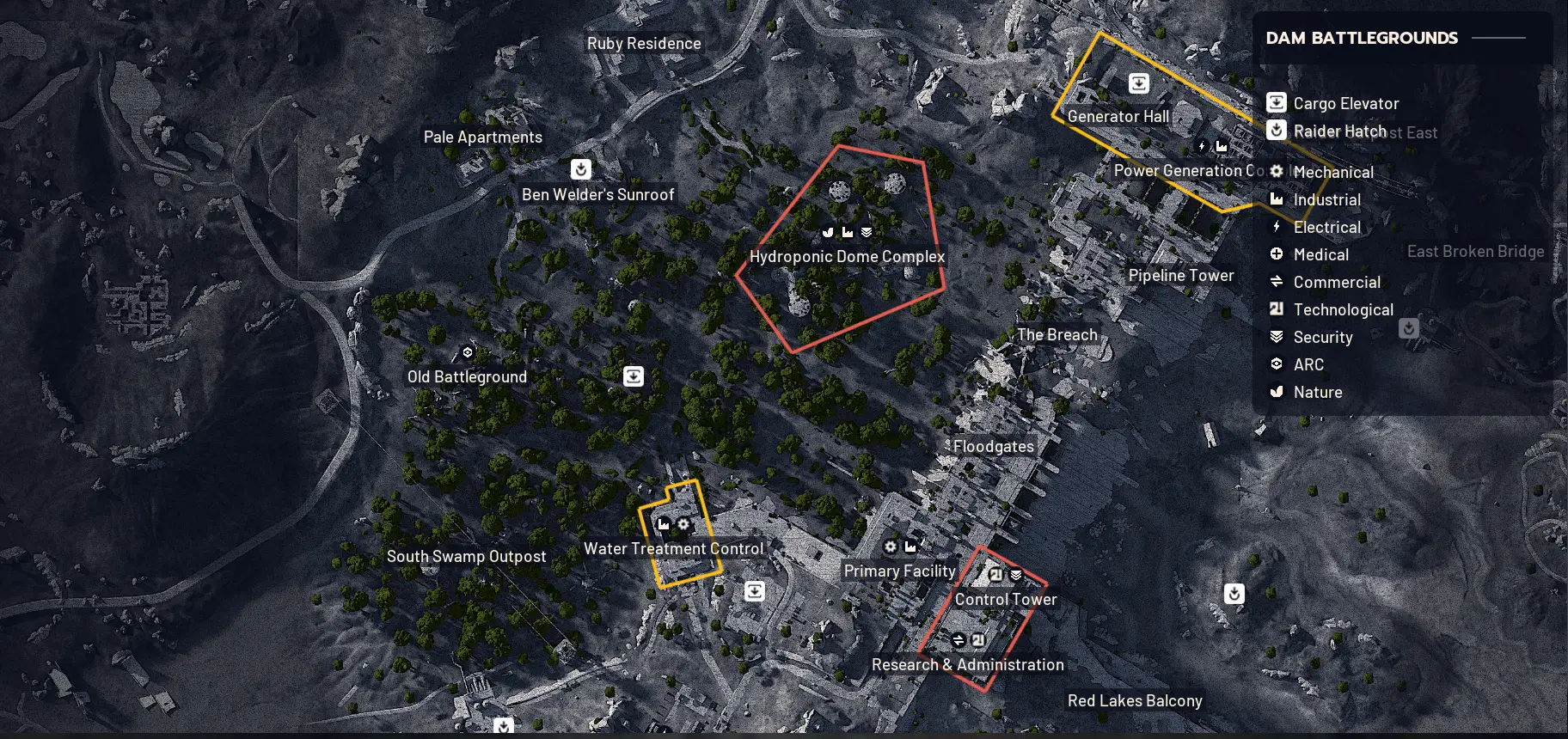
The Dam Battlegrounds map is one of the best regions in Arc Raiders for farming healing plants and high-end crafting materials. Its mix of swampy forests, flooded tunnels, and abandoned industrial facilities creates ideal conditions for rare herbs, moss, and fungi. Most of the Arc Raiders Dam plants you’ll find here are used in medical crafting, upgraded bandages, and Defibrillator recipes, making this location especially important for mid- to late-game players who want reliable survivability tools.
Best Area: Hydroponic Dome Complex
The most important area for plant farming in Dam Battlegrounds is the Hydroponic Dome Complex — a massive, overgrown structure located deep in the swamp. This area is effectively a greenhouse gone wild and should be your primary target when you’re looking for top-tier healing plants. Inside and around the Dome, you can find:
- Mushrooms – one of the strongest Arc Raiders healing plants, providing instant health restoration, perfect for clutch moments in combat.
- Great Mullein – a medicinal herb used in crafting Herbal Bandages, antiseptics, and other mid- to high-tier medical supplies.
- Torch Ginger – another key herb for Herbal Bandages, Antiseptics, and various healing-focused recipes.
- Moss – one of the most valuable plants in the game, as it’s required to craft Defibrillators and other advanced medical devices.
Mushrooms and Moss are especially important. Mushrooms cover immediate healing in the middle of a fight, while Moss is a long-term investment resource for Defibrillator crafting, making it a top priority for players running difficult raids or playing with teammates who go down often.
Red Lakes – Secondary Dam Farming Zone
Another strong area for Arc Raiders Dam plants is Red Lakes, located beneath the Testing Annex. This dried swamp region may look barren at first glance, but it hides a surprising amount of useful vegetation. Here, you can find:
- Great Mullein – once again, vital for crafting medical kits and mid-tier healing items.
- Moss – usually found near rock formations or damp patches, continuing its role as a premium Defibrillator ingredient.
- Roots – more basic, but still important Arc Raiders crafting materials used in generic recipes and lower-tier medical supplies.
While Roots are relatively standard and not as exciting, Great Mullein remains the standout plant in Red Lakes, as it’s frequently needed for bandages and healing kits. If you’re running low on medical components, a focused loop through Red Lakes can quickly refill your supply.
Water Treatment Control and Upper Pipes
You should also explore the Water Treatment Control area, especially the upper pipe systems and damp industrial corridors. These moist zones often spawn:
- Mushrooms – ideal for quick, emergency healing.
- Resin – a versatile healing and crafting resource that regenerates health over time and is used in multiple early and mid-tier medical recipes.
Because these spots are tighter and more enclosed, they can be riskier in terms of ambushes, but they reward players who know how to clear rooms efficiently and move carefully through interior spaces.
Dam Battlegrounds During Lush Blooms
When the Lush Blooms event is active, Dam Battlegrounds becomes one of the most rewarding plant farming maps in Arc Raiders. During this event, Wicker Baskets spawn:
- Around the Hydroponic Dome
- Along swamp paths and walkways
- Near camps and minor structures in the wetlands
These Wicker Baskets often contain extra herbs, mushrooms, Moss, and other healing items, massively increasing your haul per run. Combining natural spawns from the Dome, Red Lakes, and Water Treatment with event-based Wicker Baskets turns Dam Battlegrounds into a premium late-game farming route for anyone focused on medical crafting, Defibrillators, and survival-focused builds.
If you’re serious about staying alive in higher-risk raids, mastering the Arc Raiders Dam plants locations is one of the best investments you can make.
Arc Raiders Spaceport Plants
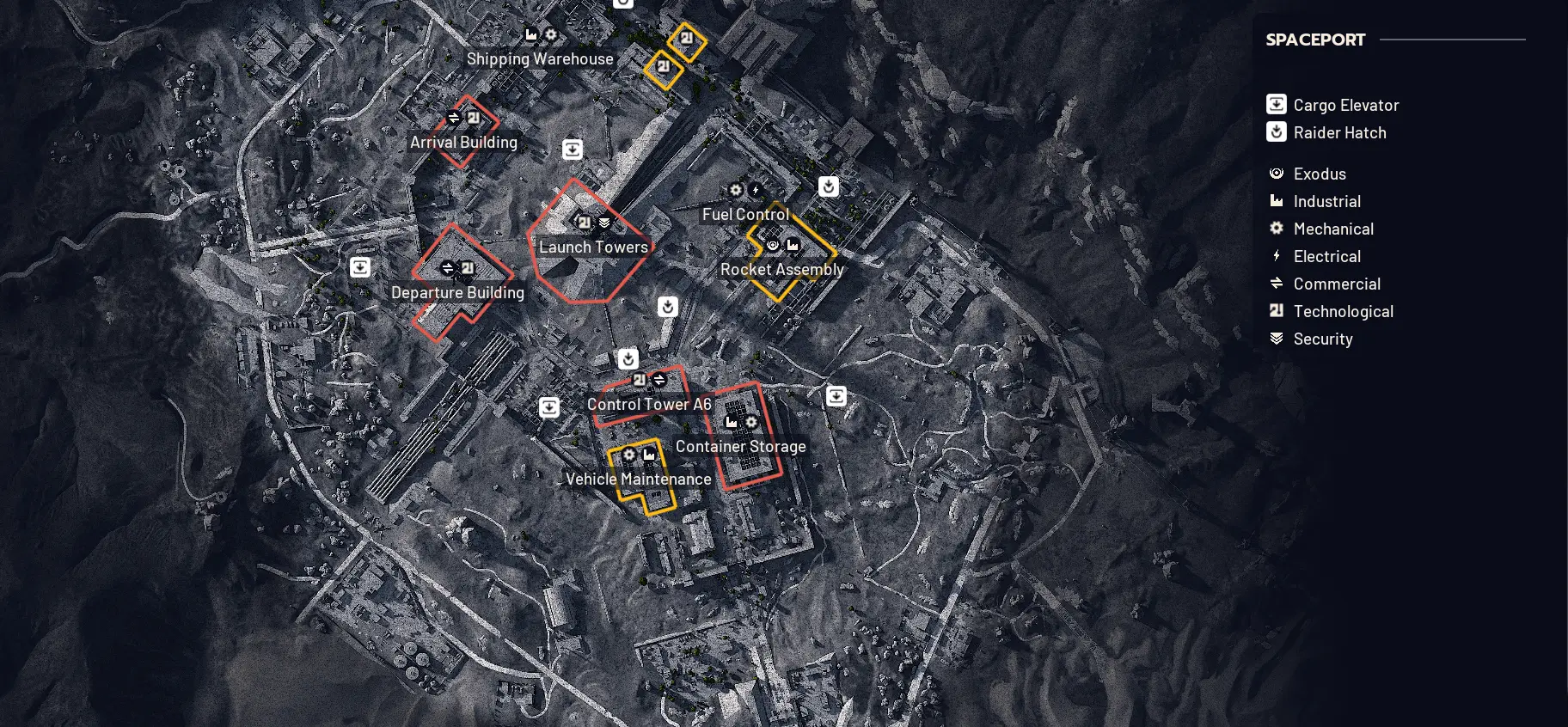
The Spaceport is one of the most industrial, metallic, and barren regions in Arc Raiders, but that doesn’t mean it’s completely dead. Hidden among scrap piles, hangars, and rusted containers are a handful of valuable plants and crafting materials that can support your healing and survival needs. You won’t find lush forests or dense groves here — vegetation is sparse and scattered — but what you do discover is often rare, efficient, and useful for crafting. Most Arc Raiders Spaceport plants grow along the outer edges of the map and in dry container zones far from the main facilities.
You’ll occasionally encounter Agave plants around rocky hills, raised platforms, and the dustier stretches of the Spaceport exterior. Agave slowly regenerates over time and can be used to craft Agave Juice or Herbal Bandages, making it a solid backup option when you can’t reliably farm Resin or Great Mullein on other maps. For players who prefer running industrial raids over swamp or forest maps, Agave becomes an important way to stay supplied without changing regions.
In addition, small clusters of Mushrooms can spawn in shaded, slightly greener pockets of the Spaceport. One of the most notable spots is south of Little Hangar, near the East Container Yard, where a rare clump of trees and vegetation breaks up the otherwise lifeless environment. These Mushrooms provide instant healing, just like in other regions, and are especially useful if you need a quick health boost before crossing exposed runways or container alleys.
Spaceport Plants During Lush Blooms
When the Lush Blooms event is active, the Spaceport becomes surprisingly rewarding for gatherers. New Wicker Baskets start spawning:
- Inside abandoned hangars and warehouses
- Near loading docks and storage bays
- Along the runway perimeter and exterior paths
These baskets can contain anything from basic Roots and Resin to rarer plants like Torch Ginger or other medical herbs. Because enemy density and pressure in Spaceport are usually lower than in Dam Battlegrounds or Buried City, the region turns into a relatively safe farming zone during Lush Blooms.
For efficient farming, consider:
- Running a loop along the outer ring of the map to grab Agave and check for Mushrooms.
- Cutting through hangars and warehouses to loot Wicker Baskets during the event.
- Using the relatively light resistance to farm plants while simultaneously completing contracts or looting tech.
If you’re looking for a quieter alternative to swamp and desert maps, Arc Raiders Spaceport plants offer a low-pressure way to stock up on crafting materials, bandage components, and backup healing items — especially when Lush Blooms is active.
Arc Raiders Plants – Full List
Here is the complete Arc Raiders plants list, covering every healing herb, fruit, and crafting material you can gather across all Arc Raiders maps. Each plant serves a specific role — whether it’s crafting medical kits, brewing stamina food, or contributing to Scrappy upgrades. Understanding where these plants grow and what they’re used for will help you build smarter, faster, and safer farming routes while avoiding unnecessary or inefficient raids.
All of these Arc Raiders plants can appear in nature zones, residential gardens, or event-based Wicker Baskets during Lush Blooms. Their rarity, value, and purpose change depending on the biome — for example, Blue Gate excels at supplying fruits, Dam Battlegrounds is the best map for rare healing herbs and fungi, and Buried City is the ideal place to find tough desert vegetation like Prickly Pear and Agave.
Below is the full list of plants currently available in Arc Raiders:
| Plant | Location |
|---|---|
| Lemon | Blue Gate, Buried City |
| Apricot | Dam Battlegrounds, Blue Gate, Buried City |
| Olive | Blue Gate |
| Prickly Pear | Buried City, Dam Battlegrounds |
| Agave | Buried City, Spaceport, Dam |
| Resin | Blue Gate, Dam Battlegrounds |
| Mushroom | Dam Battlegrounds, Spaceport |
| Great Mullein | Dam Battlegrounds (Red Lakes, Hydroponic Dome) |
| Torch Ginger | Dam Battlegrounds, Blue Gate |
| Moss | Dam Battlegrounds (Hydroponic Dome) |
| Roots | All maps (Nature zones) |
🎯 Get hands-on guidance in positioning, repair timing, and ambush setups with Arc Raiders Coaching — one-on-one sessions from top-tier tactical players.
Arc Raiders Lemon
Lemons are one of the most common and useful Arc Raiders plants, found primarily in Blue Gate and Buried City. They provide a quick stamina boost and are an important ingredient for Scrappy Level 3 upgrades, making them valuable even in mid-game progression. You can reliably find lemon trees in the Olive Grove area of Blue Gate or near the Library Gardens and Town Hall in Buried City. During the Lush Blooms event, fruit trees drop additional lemons when kicked, allowing you to gather large quantities in a single run.
Aside from being an instant stamina resource, lemons are also used in the Fruit Mix recipe, where they combine with Apricots to grant longer stamina regeneration. Because they’re lightweight, easy to find, and grow on tightly packed tree clusters, lemons are one of the best early-game fruits for solo farming, crafting, and quick Scrappy-upgrade material routes.
Arc Raiders Roots
Roots are among the most common and beginner-friendly crafting materials in Arc Raiders. They spawn across all maps, especially in natural ground zones, forests, and older garden areas. You’ll frequently pick up Roots while scavenging under trees or bushes in Blue Gate and Dam Battlegrounds, making them an easy resource to stockpile without dedicated farming. During the Lush Blooms event, Roots also appear frequently in Wicker Baskets, further increasing their availability.
Roots don’t provide direct healing, but they’re used in several early-game recipes. They can be crafted into Herbal Bandages, recycled into Seeds for trading, or sold as quick vendor cash, making them a reliable filler material for all Raiders. Whether you’re just starting your journey or topping up supplies before a raid, Roots remain one of the most consistent and accessible resources in the entire game.
Arc Raiders Apricot
Apricots are another core fruit in the Arc Raiders plants system, available mainly in Blue Gate, Buried City, and occasionally in Dam Battlegrounds. The best locations to farm Apricots are the Olive Grove in Blue Gate and the Town Hall Gardens in Buried City, where fruit-bearing trees grow in dense formations that make farming routes fast and efficient.
During Lush Blooms, Apricots can also be found inside Wicker Baskets in farms, fields, and residential areas, making the event one of the easiest opportunities to gather large stacks. Apricots are frequently used in Fruit Mix recipes alongside Lemons, offering longer stamina recovery than single fruits. Because they’re easy to carry and consistently available, Apricots are ideal for new players, solo farmers, and anyone looking to maintain steady stamina between raids.
Arc Raiders Olive
Olives are mid-level Arc Raiders crafting components and blueprint materials most commonly found in the Blue Gate region. They grow primarily in the Olive Grove, where they share space with lemon trees, apricot trees, and other small fruit trees. By kicking these tree trunks, you can drop a mix of fruits, and with a bit of luck, Olives will fall alongside Lemons and Apricots. During the Lush Blooms event, Olives can also be looted from Wicker Baskets scattered around nearby farms, roads, and settlements, further increasing your chances of stocking up.
Olives are especially important because they’re required for Scrappy Level 4 upgrades, making them a key resource for players progressing into the mid-game. On top of their crafting value, Olives can be consumed directly for a small stamina increase, serving as a backup endurance item when you’re low on supplies.
However, Olives are less common than other fruits such as Lemons or Apricots, so you’ll need focused farming to collect them in meaningful quantities. To avoid losing them to other players or wasting time on low-yield areas, prioritize:
- The core Olive Grove fields
- Nearby valleys and slopes connected to the orchards
- Lush Blooms Wicker Baskets in agricultural and settlement zones
Running tight loops in and around Olive Grove is the most efficient way to safely farm Olives for both Scrappy upgrades and long-term crafting stockpiles.
Arc Raiders Poisonous Plant
The Poisonous Plant is a very rare Arc Raiders plant used exclusively for a single quest: “Arc Raiders: A New Type of Plant”, one of Lance’s Medical Quests, which becomes available after completing “Building a Library for Apollo.” This quest is unique in that it must be completed in one uninterrupted attempt — if you die or extract before finishing all objectives, your progress is reset and you’ll have to start over.
To obtain the Poisonous Plant, you need to travel to the Dam Battlegrounds and move toward the Old Battleground area on the western side of the map. Once there, look for a giant crashed Baron Husk sunk into the swamp. Around its legs, you’ll notice several knee-high plants with distinct red-orange blooms. Interact with one of these glowing red-orange plants to collect a Poisonous Plant Sample.
After securing the sample, your next challenge is to extract safely and return it to Lance’s clinic in Speranza. Losing the sample by dying or extracting early will force you to repeat the entire process, so it’s wise to:
- Plan a safe route in and out of the Old Battleground.
- Avoid unnecessary fights near the Baron Husk.
- Bring enough healing items and utility to handle swamp enemies.
If you want a detailed walkthrough of the full quest chain, rewards, and story, you should refer to our dedicated Arc Raiders Quests Guide, where we break down “A New Type of Plant”, Lance’s storyline, and all related tasks step by step.
Arc Raiders Mushroom
Mushrooms are one of the most valuable healing plants in Arc Raiders, providing instant health restoration when consumed. Unlike regeneration-based items, Mushrooms heal you on the spot, making them perfect for clutch moments when you’re low on HP mid-fight or just before a risky push.
Mushrooms are found mainly in the Dam Battlegrounds region, especially around the Hydroponic Dome and along the forest paths leading to and from it. These damp, shaded areas are ideal for spotting clusters of fungi, often grouped near trees, rocks, or swamp edges. You can also find smaller Mushroom communities:
- Near Water Treatment Control, particularly in moist industrial corridors and pipe areas
- In rare tree-covered spots within Spaceport, such as the area south of Little Hangar near the East Container Yard
Mushrooms are crucial for Scrappy Level 5 upgrades and are used in crafting advanced medical items that support late-game and high-risk raids. Because of their power and rarity, it’s always worth grabbing every Mushroom you see, even if your inventory is almost full.
During the Lush Blooms event, Mushroom spawn rates increase in swampy zones and around the Hydroponic Dome, and they can occasionally appear inside Wicker Baskets along wet paths or camp outskirts. For late-game survival and squad support, consistently farming Mushrooms will give you a major advantage in both healing uptime and Scrappy progression, making them one of the highest-priority plants in the entire game.
Arc Raiders Moss
Moss is one of the rarest and most valuable Arc Raiders healing plants, and its presence in the open world is extremely limited. You’ll mainly find Moss in Dam Battlegrounds, particularly in and around the Hydroponic Dome and Red Lakes areas. It tends to grow on rock structures, tree trunks, and swampy ground, often blending into the environment so well that it’s easy to miss unless you’re actively scanning your surroundings.
Moss can also appear inside Wicker Baskets during the Lush Blooms event across Arc Raiders maps, but its drop rate is completely random. Even when the event is active, you should treat Moss as a rare bonus rather than something you can reliably farm in bulk.
Despite being classified as a healing plant, Moss is far more important as a late-game crafting ingredient. It’s a core component in high-tier medical items such as Defibrillators and Vita Shots, both of which are vital for reviving teammates or rapidly stabilizing your squad in difficult raids. Because of how rare Moss is, you should:
- Extract as soon as it’s safe if you find multiple Moss in a single run.
- Store it in your stash rather than using it casually on low-risk content.
- Save it specifically for end-game content, tough Expeditions, and squad-focused builds.
In short, Moss is not just another herb — it’s a premium revival material that can turn a failed raid into a successful extraction when used correctly.
Arc Raiders Prickly Pear
Prickly Pears are desert fruits found primarily in Buried City and Dam Battlegrounds, making them a signature resource of Arc Raiders’ harsher, arid biomes. They grow near cactus clusters in the southern desert zones of Buried City and around the Red Lakes area in Dam Battlegrounds. These cactus patches are easy to spot from a distance, but often located in exposed areas with limited cover, so keep an eye out for enemy patrols while harvesting.
During the Lush Blooms event, the number of cactus clusters increases, and additional Wicker Baskets appear across desert routes. This makes it significantly easier to farm Prickly Pears in bulk, especially if you chain several fast runs through the same region.
Prickly Pears offer stamina restoration when consumed and are required for Scrappy Level 4 upgrades, alongside Olives and Agave. Because they’re less common than standard fruits like Lemons or Apricots, they’re considered a rare but high-value resource. Whenever you see a cactus patch during your desert raids, you should:
- Always loot it fully before moving on.
- Consider routing your Buried City or Dam farming loops past known cactus clusters.
- Use Lush Blooms as your main window for stockpiling them for Scrappy progression.
If you’re optimizing mid-game upgrades and desert farming routes, Arc Raiders Prickly Pear should be one of your top plant priorities.
Arc Raiders Resin
Resin is a more common yet extremely useful Arc Raiders healing plant that provides health regeneration over time when used. Instead of an instant heal, it works like a natural bandage, slowly restoring your HP while you reposition, heal up behind cover, or traverse to a safer area.
Resin is mostly found in Blue Gate and Dam Battlegrounds, especially near trees, fallen logs, forest edges, and old wooden structures. It’s one of those resources you’ll be picking up constantly if you’re already farming fruits and herbs in these regions. During the Lush Blooms event, Resin can also spawn in Wicker Baskets scattered throughout nature-heavy zones, making it even easier to maintain a large supply.
Because of how flexible Resin is, it plays a big role in early Arc Raiders crafting recipes, including low-tier medical items and basic survival gear. It is:
- Perfect for beginners, offering cheap, reliable healing before advanced gear is unlocked.
- Lightweight and stackable, so it doesn’t slow down your movement or inventory management.
- A great “always pick it up” resource during early and mid-game raids.
For new Raiders, focusing on Resin farming in Blue Gate and Dam Battlegrounds is one of the easiest ways to ensure you never run out of healing options during your progression.
Arc Raiders Agave
Agave is a versatile desert plant found in Buried City, Spaceport, and parts of Dam Battlegrounds. It usually grows near rock formations, dry ground, and canyon-like terrain, with a particularly high presence around the Red Lakes area in Dam. If you’re running routes through these maps, it’s worth learning the rocky outcrops and cliff edges where Agave tends to spawn.
During the Lush Blooms event, Agave can also be found in Wicker Baskets across these regions, giving you even more chances to gather it without having to chase specific spawn points.
Agave provides slow health regeneration when consumed and is a key ingredient in crafting Agave Juice and Herbal Bandages. Because it’s relatively common for players who frequent desert and industrial maps, Agave ends up being one of the most practical Arc Raiders healing plants for mid-game players. It is:
- Easy to find across multiple maps.
- Used in high-demand medical recipes like bandages and healing drinks.
- Valuable for trading or recycling into Seeds, giving it economic value in addition to its healing role.
If you’re regularly running Buried City, Spaceport, or Dam, you should treat Agave as a core part of your healing and crafting economy, always picking it up to support both your personal survival and Scrappy-focused progression.
Arc Raiders Torch Ginger
Torch Ginger is a rare tropical flower used in Arc Raiders medical crafting, prized for both its healing and utility potential. It thrives in humid, warm environments, most notably inside the Dam Battlegrounds Hydroponic Dome, where overgrown vegetation and artificial humidity create perfect growing conditions. You can occasionally spot Torch Ginger in Blue Gate’s greener river valleys and forest edges, but Dam remains its most reliable habitat.
During the Lush Blooms event, Torch Ginger becomes easier to obtain. It can appear inside Wicker Baskets near water sources, swamp paths, farms, and small camps, giving you more chances to collect it without having to push deep into dangerous zones.
Torch Ginger is primarily used to craft Herbal Bandages and Shield Rechargers, placing it among the more valuable Arc Raiders healing plants. Herbal Bandages provide dependable sustain between fights, while Shield Rechargers are crucial for surviving late-game encounters and extended raids. Because the plant is relatively rare and used in multiple high-demand recipes, you should always:
- Watch for its bright red, torch-like petals, which stand out clearly against swamp greens and muddy terrain.
- Prioritize harvesting it whenever you enter Hydroponic Dome or high-humidity areas.
- Save it for mid- and late-game crafting rather than burning it on low-risk content.
If your build relies on shields, sustained healing, or heavy raiding, Arc Raiders Torch Ginger quickly becomes one of your most sought-after plants.
Arc Raiders Great Mullein
Great Mullein is a tall, medicinal herb that plays a central role in Arc Raiders healing and medical crafting. It primarily grows in Dam Battlegrounds, especially around the Red Lakes and Hydroponic Dome zones. Because it rises above most swamp plants, Great Mullein is easy to spot, often appearing in small clusters near Moss and Torch Ginger, turning these areas into high-value plant farming hotspots.
During the Lush Blooms event, Great Mullein can also appear inside Wicker Baskets scattered across Dam Battlegrounds — along swamp paths, near camps, and close to industrial ruins. This makes event windows the best time to stockpile the herb for future high-end crafting.
Great Mullein is one of the most important Arc Raiders healing plants, as it is required to craft:
- Herbal Bandages – core healing items used throughout mid- and late-game.
- Antiseptics – stronger medical components that help mitigate damage over time and prepare you for harder raids.
Because it’s a mid- to late-game resource, Great Mullein is significantly more valuable than basic fruits or Roots. Whenever you run Dam Battlegrounds, you should:
- Add Red Lakes and Hydroponic Dome to your farming route.
- Prioritize collecting Great Mullein over more common plants when inventory space is limited.
- Keep a stash reserved for high-tier medical crafting and not just quick sales.
If you plan to tackle difficult Expeditions or support your squad with top-tier healing, Arc Raiders Great Mullein is absolutely essential.
Arc Raiders – How to Use Plants
Each plant in Arc Raiders serves a specific role, and learning how to use them correctly is key to efficient progression. Broadly, plants fall into a few major categories: stamina recovery, health regeneration, instant healing, crafting materials, and Scrappy upgrade components.
Here’s how to get the most out of Arc Raiders plants:
- Direct Consumption
- Fruits like Lemons, Apricots, and Prickly Pears restore stamina and sometimes a bit of health.
- Healing plants such as Mushrooms and Resin restore health either instantly or over time.
- These are ideal for staying alive during raids without burning rarer crafted items.
- Medical Crafting
- Herbs like Torch Ginger, Great Mullein, Agave, Moss, and Roots are used to craft Herbal Bandages, Antiseptics, Defibrillators, Agave Juice, Shield Rechargers, and other medical gear.
- High-tier recipes usually demand rarer plants (Moss, Great Mullein), so it’s smart to save these for late-game content.
- Scrappy Upgrades
- Certain fruits and plants, such as Lemons, Prickly Pears, Olives, Mushrooms, and others, are required for Scrappy level upgrades (Level 3, 4, 5, etc.).
- Investing plants into Scrappy upgrades boosts your long-term power, so don’t spend all rare materials on consumables if you still need key upgrade tiers.
- Trading and Recycling
- Common plants like Roots and Agave can be recycled into Seeds or sold for quick currency, making them great economic fillers when your stash is full.
- Event Optimization (Lush Blooms)
- During Lush Blooms, focus on hitting Wicker Baskets and high-density nature zones to mass-farm plants across multiple types in fewer raids.
- Use these windows to stock up on rare herbs (Moss, Great Mullein, Torch Ginger) and refill your medical and crafting reserves.
Mastering how to use plants in Arc Raiders means treating them not as random loot, but as a structured resource system: eat the common ones, craft with the important ones, invest the rare ones into upgrades, and always extract when you’ve found something truly valuable.
| Plant | Main Use | Crafting / Upgrade |
|---|---|---|
| Lemon | Restores stamina | Used in Fruit Mix; required for Scrappy Level 3 |
| Apricot | Stamina boost | Fruit Mix, Scrappy Level 3–4 upgrades |
| Olive | Mid-game crafting | Scrappy Level 4 upgrade |
| Prickly Pear | Stamina and an upgrade item | Scrappy Level 4 upgrade |
| Agave | Healing over time | Agave Juice, Herbal Bandages |
| Resin | Health regeneration | Early Medical Supplies, Bandages |
| Mushroom | Instant healing | Scrappy Level 5 upgrade, Medical items |
| Great Mullein | Medical herb | Herbal Bandages, Antiseptic |
| Torch Ginger | Medicinal flower | Herbal Bandages, Shield Rechargers |
| Moss | Rare healing material | Defibrillator, Vita Shot |
| Roots | Common ingredient | Herbal Bandages, recyclable for Seeds |
Arc Raiders Plants Farming Tips
Farming plants becomes very straightforward in Arc Raiders once you know where to look and how to move through each zone safely. Every map has its own set of spawn types and plant distributions, so choosing the right region and planning efficient paths will save you a lot of time while keeping your backpack filled with healing herbs, fruits, and crafting materials.
Here are some practical Arc Raiders plants farming tips to make every run count:
- Choose the right map for your goals
- Go to Blue Gate if you need fruits like Lemons, Apricots, and Olives for stamina and early crafting.
- Farm Dam Battlegrounds when you want healing herbs and rare plants such as Mushrooms, Moss, Great Mullein, and Torch Ginger.
- Visit Buried City or Spaceport if you’re specifically after desert plants like Agave and Prickly Pears, which are required for Scrappy upgrades and mid-game medical crafting.
- Take full advantage of the Lush Blooms event
- When Lush Blooms is active, loot every Wicker Basket you see.
- They spawn near camps, roads, farms, and residential zones, and can contain a mix of fruits, roots, herbs, and rare healing plants.
- Use this event to stockpile Moss, Great Mullein, Torch Ginger, and Mushrooms while also refilling your fruit and Resin supply.
- Go light and fast
- Run plant-farming raids with minimal gear — a basic weapon, a bit of healing, and room in your backpack.
- If you die, you lose less, and plants don’t require heavy loadouts anyway.
- Mobility is key: the faster you move, the more zones and spawns you can hit per raid.
- Plan quick, efficient loops
- Design short, circular routes that start near a high-density plant area and end close to an extraction point.
- For example, begin at Olive Grove in Blue Gate or the Hydroponic Dome in Dam, fill your bag with fruits and herbs, then extract quickly.
- Avoid unnecessary fights — only engage when it’s safer than running or when enemies block your main route.
- Solo vs Squad strategy
- Solo players should prioritize quieter zones such as the back areas of Blue Gate or the outskirts of Buried City, where enemy density is lower and you can focus on gathering.
- Squads can push through enemy-heavy areas like deep Dam swamps or contested desert spots to farm more dangerous but high-value plants such as Moss, Great Mullein, and Torch Ginger.
- Use your safe pocket wisely
- Always stash rare items (like Moss, Great Mullein, Mushrooms, or Olives) into your safe pocket as soon as you pick them up.
- That way, even if you die before extraction, you keep the most important plants for Scrappy upgrades and high-tier medical crafting.
With the right mindset, plant farming turns into a reliable loop: choose a map, build a route, play fast, extract often, and protect your rare herbs.
Arc Raiders Plants FAQ
Here are the most common questions players ask about plants in Arc Raiders, covering where to find them, how to use them for crafting and Scrappy upgrades, and how events like Lush Blooms affect farming.
Where Can You Find Plants in Arc Raiders?
You can find plants across all major maps in Arc Raiders — Blue Gate, Buried City, Dam Battlegrounds, and Spaceport.
- Blue Gate offers a high density of fruits such as Lemons, Apricots, and Olives, plus some Resin in farmlands and gardens.
- Dam Battlegrounds is the best map for healing herbs and rare plants, including Mushrooms, Great Mullein, Moss, Torch Ginger, and Roots.
- Buried City focuses on desert plants like Prickly Pear and Agave, alongside a few fruit trees.
- Spaceport has sparse but valuable plants, such as Agave and Mushrooms in shaded or tree-covered pockets.
What Is the Best Map to Farm Plants in Arc Raiders?
The Dam Battlegrounds is widely considered the best map to farm Arc Raiders healing plants. It features:
- A dense mix of swamps, forests, and wet tunnels
- The Hydroponic Dome, which is packed with Mushrooms, Moss, Great Mullein, and Torch Ginger
- Additional spawns around Red Lakes and Water Treatment Control
If you’re focused on high-tier medical crafting and late-game survival, Dam Battlegrounds should be your primary farming destination.
What Is the Lush Blooms Event in Arc Raiders?
Lush Blooms is a limited-time Arc Raiders plants event that:
- Increases the spawn rate of fruits, herbs, and crafting plants in nature zones.
- Adds Wicker Baskets near camps, roads, farms, residential areas, and swamp paths.
- These baskets contain random plants and healing items, ranging from common Roots and Resin to rare Moss, Mushrooms, and Torch Ginger.
It’s the best time to farm plants in bulk, especially if you want to refill your medical stash and Scrappy materials quickly.
Which Plants Are Used for Scrappy Upgrades in Arc Raiders?
Several Arc Raiders plants are required for Scrappy upgrades, including:
- Lemons
- Apricots
- Olives
- Prickly Pears
- Mushrooms and others at higher levels
These plants are consumed at different upgrade tiers to level up Scrappy and unlock new passive bonuses, efficiency improvements, and support features. It’s usually smarter to save some of these fruits for upgrades instead of using all of them as consumables.
Can You Trade or Sell Plants in Arc Raiders?
Yes. Most Arc Raiders plants can be:
- Sold to traders for currency
- Recycled into Seeds for use in Celeste’s shop or for other trading opportunities
Common materials like Roots and Agave are perfect for recycling or selling, while rare plants such as Moss and Great Mullein are usually better saved for Defibrillators, high-tier bandages, and advanced medical items rather than turned into cash.
Do Plants Respawn After Each Raid in Arc Raiders?
Yes, all plants in Arc Raiders respawn after every raid. This means you can:
- Re-run the same farming routes over and over
- Consistently hit hotspots like Blue Gate’s Olive Grove, Dam’s Hydroponic Dome, Red Lakes, or the southern desert of Buried City
- Use the same optimized loops to refill your inventory every session
Because plant spawns reset each raid, mastering route planning is one of the best ways to ensure a steady, predictable supply of healing plants, fruits, and crafting materials throughout your Arc Raiders journey.