

Content:
Introduction
A fresh way to gather in the open world
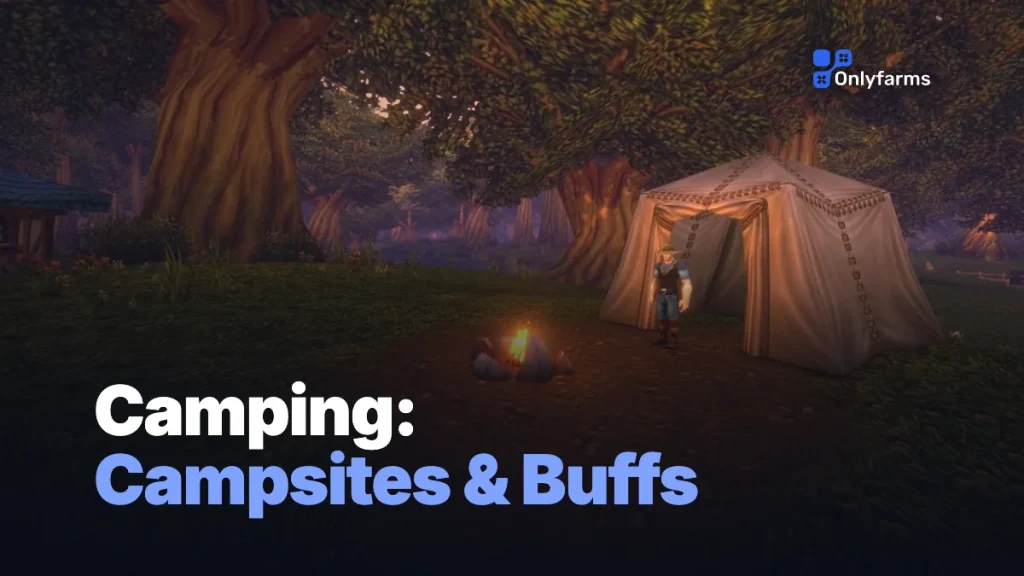
Camping is one of the standout additions in WoW Forever, and it reframes how players spend their downtime between fights. Instead of running back to town every time you want a breather, you can now set up a temporary campsite almost anywhere out in the world. It’s quick to place, easy to share, and it gives everyone standing nearby a reason to slow down for a moment.
The system was built with community in mind. A campsite acts as a natural gathering point, sparking those small, memorable run-ins with other players that make leveling feel alive. Think of it as a shared pit stop rather than a personal address — a place to buff up, trade a few words, and move on together.
This guide walks through everything you need to know: what Camping actually is, how the mechanics work step by step, which profession objects unlock which buffs, and how the whole system sits alongside inns and player housing. If you’re gearing up for the grind, you can also buy WoW Forever gold and boosts at Onlyfarms to smooth out the journey.
What Camping Is
A temporary, social campsite — not a home base
At its core, Camping lets you craft a short-lived campsite out in the open world. You can drop one down in nearly any zone, and the moment it’s up, it becomes a small hub of activity. The design goal is social: by giving players a shared spot to pause, WoW Forever encourages the kind of friendly, unplanned encounters that used to happen naturally around campfires and quest hubs.
It’s important to be clear about what Camping is not. A campsite is a temporary stop, so it isn’t a permanent base you decorate and return to. It also isn’t the same as the Housing feature found in retail World of Warcraft — there’s no plot of land, no persistent structure, and no long-term ownership involved. A campsite exists in the moment and then it’s gone.
Just as important, Camping is meant to complement inns rather than replace them. Inns still serve their traditional role, but a campsite gives you flexibility when you’re deep in a zone and don’t want to break your momentum. The two work side by side, each covering a different situation.
The feature also ties into a larger theme running through WoW Forever: making professions matter more out in the open world. Camping is one of the clearest expressions of that push, since the objects you place around a fire are tied directly to what your character can craft.
How Camping Works
From campfire to shared buffs, step by step
Getting a campsite running is straightforward, and the real depth comes from how players contribute to it together. Here’s the loop from start to finish:
- Place your campfire. Everything begins with a fire. A Basic Campfire is the entry-level option, and it anchors the campsite in the world.
- Check your object capacity. A Basic Campfire supports up to three profession objects at once. Upgraded campfires raise that ceiling, holding either five or ten objects depending on the tier, so a better fire means a richer camp.
- Contribute an object. Each player standing near the campsite can add one profession object of their own. That’s the social heart of the system — several players pooling their crafts into a single shared setup, each one covering a slot.
- Share the buffs. Once objects are placed, everyone nearby benefits from the buffs they provide. You do not need the matching profession to enjoy the effect; simply being at the camp is enough to pick up the bonuses others contributed.
- Mind the cooldown. Profession objects share a single one-hour cooldown. That means you’ll want to plan your placements, since you can’t spam objects back to back once one goes down.
The practical takeaway is that a group camp is far more powerful than a solo one. A single player with a Basic Campfire fills three slots at most, but a handful of friends with different professions can stack a wide mix of buffs in one spot — and everyone shares in the result.
Profession Objects & Buffs
Which professions bring what to the fire
The objects you can place come straight from the crafting professions, and each one delivers a distinct benefit. Below is a rundown of the confirmed profession objects and the effects they provide at a campsite.
| Profession | Object | Buff |
|---|---|---|
| Alchemy | Alchemy Lab | Alchemy crafting station at the camp |
| Leatherworking | Tanning Rack | Leatherworking crafting station |
| Cooking | Upgraded Campfire | Expands the camp to five or ten object slots |
| Blacksmithing | Sharpening Wheel | Increases Attack Power |
| Tailoring | Faction Banner | Increases Spirit |
| Herbalism | Incense Candle | Increases Intellect |
A quick note on the Cook’s contribution: because upgraded campfires unlock the larger five- and ten-slot camps, having a Cook in the group is what turns a modest three-object fire into a proper hub. It effectively raises the ceiling for everyone else’s objects.
How you unlock camping objects
Progression follows the professions themselves. Your first camping object becomes available once you reach profession skill level 20, so it’s an early reward rather than an endgame chase. From there, the more advanced objects are learned through Blueprint recipes, and those Blueprints drop from specific dungeon bosses. In other words, expanding your camping toolkit gives you another reason to run dungeons and level your professions in tandem.
Camping vs Inns & Housing
Where Camping fits alongside the classics
Because Camping shares some surface-level ideas with resting and with player housing, it’s worth spelling out how it differs from both.
Camping vs inns. Inns remain a fixed, reliable part of the world — you visit them, rest, and use their services. Camping doesn’t compete with that. It fills the gap for those long stretches when you’re out in a zone and heading back to an inn would cost you time and momentum. A campsite lets you and nearby players buff up on the spot, then keep going. The systems are partners, not rivals.
Camping vs Housing. This is the distinction that trips people up most. Retail World of Warcraft’s Housing is about permanence — a personal space you own, build up, and revisit over time. Camping is the opposite in spirit: a campsite is temporary, shared, and disposable. You aren’t investing in a lasting home; you’re setting up a brief communal stop that vanishes once its purpose is served.
- Permanent vs temporary: Housing persists; a campsite is short-lived.
- Private vs shared: A home is yours; a campsite is a gathering point for everyone nearby.
- Decoration vs utility: Housing is about expression and ownership; Camping is about on-the-go buffs and social encounters.
Seen together, the three systems cover different needs: inns for dependable town-side resting, Housing for long-term personal space, and Camping for spontaneous, buff-sharing stops in the middle of the action.
Frequently Asked Questions
Camping questions answered
Do I need a profession to benefit from a campsite?
No. Anyone standing near the camp receives the buffs from whatever objects have been placed, regardless of their own professions. Professions only matter when you want to contribute an object yourself.
How many objects can a single campfire hold?
A Basic Campfire supports up to three profession objects. Upgraded campfires — provided by Cooks — expand that to five or ten objects, depending on the tier of the fire.
Can several players add objects to the same camp?
Yes, and that’s the intended way to play. Each nearby player can contribute one object, so a group with varied professions can fill many slots and stack a broad set of buffs that everyone shares.
When can I start camping, and how do I get better objects?
You learn your first camping object at profession skill level 20. More advanced objects come from Blueprint recipes, which drop from specific dungeon bosses — so running dungeons is the path to expanding your options.
Is there a cooldown on placing objects?
Yes. Profession objects share a one-hour cooldown, so it pays to think about which objects to place and when, rather than dropping them all at once.